



In the era of the internet and social media, almost all of us are, at least to some extent, connected to what is happening in politics, the economy, and finance. This can be a direct connection — following domestic and international news, debating policies, or even participating in rallies or civic initiatives — or a passive one, such as commenting on price increases. Events that once took decades to unfold can now escalate within a year, amplified by global media and instant communication. The world feels crowded with events, opinions, and constant informational noise.
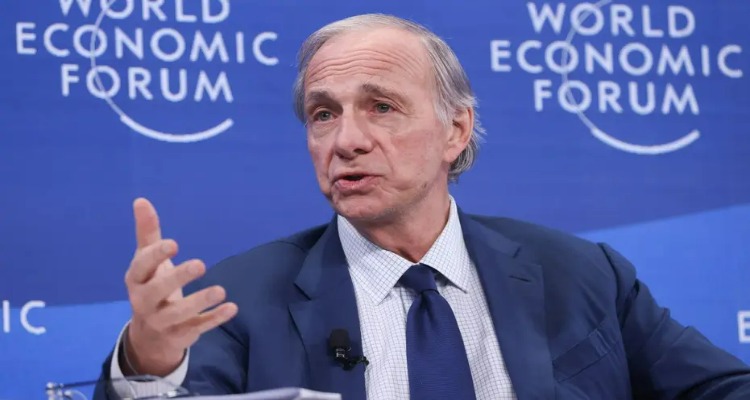
Against this background, many people try to make sense of where the world is heading. One of the voices that has attracted attention in recent years is Ray Dalio, founder of Bridgewater Associates and one of the most well-known macro investors in the world. For years, Dalio has been speaking about a changing world order. His core idea is that we are not just facing a normal business cycle, but a broader historical cycle in which monetary, political, and geopolitical orders evolve, peak, and eventually transform.
Dalio often draws on history, studying centuries of data on debt, currencies, and power shifts. His argument is not that collapse is inevitable, but that large debt burdens, internal inequality, and external rivalries tend to reshape global systems over time. In his view, when debt grows faster than income and productivity, countries face tough choices such as austerity, restructuring, or monetary expansion. These pressures, combined with geopolitical competition, can gradually shift the balance of power between nations.
History provides many examples showing that today’s challenges are not entirely new.
For much of history, gold and silver were money. Yet even then, lending with interest was common. Rulers borrowed from merchants, bankers, or other states to finance wars and cover deficits. The problem was simple: to repay principal plus interest, more “hard” money was needed than actually existed. When precious metals were limited, rulers often debased coinage — reducing gold or silver content or minting more coins from cheaper metals.
In the Roman Empire, the silver denarius fell from about 95% silver to under 5% within a few centuries as military and fiscal pressures grew. The result was inflation, loss of purchasing power, and declining trust in money. Trade weakened, social tensions rose, and political instability followed.
In medieval Europe, similar patterns appeared. In France, Philip IV borrowed heavily and later reduced the silver content of coins, contributing to inflation and unrest. In England, repeated debasements to fund wars led to rising prices and falling real wages, hitting urban and trading centers especially hard.
In early modern Spain, even massive silver inflows from the Americas did not solve the problem. Kings borrowed heavily from foreign bankers and issued lower-quality coinage. Inflation, heavy taxation, and capital outflows weakened the domestic economy and contributed to imperial decline.
Even under the classical gold standard before World War I, credit and bonds expanded much faster than gold reserves. The system looked stable, but it rested on growing leverage. When stress hit in 1913–1914, countries suspended convertibility. The gold shortage was less a root cause and more a symptom of excessive credit built on limited real assets.
Across eras, a recurring pattern appears: rising debt, pressure on “hard” money, debasement or monetary expansion, inflation, and then social and political strain. In many ways, coin debasement was an early form of what we now call money printing.
What does this mean for us as individuals?
It does not mean panic, but it does suggest awareness and prudence. Some timeless principles remain relevant, and Ray Dalio’s advice includes:
• Maintain financial discipline — consistently spend less than you earn.
• Diversify savings and investments across asset types, including defensive ones.
• Follow opportunities and stability.
• Invest in knowledge, skills, and your children’s education — these are assets that cannot be debased.
It can also be added that one should avoid overreliance on any single narrative, currency, or country, and focus on long-term resilience rather than short-term speculative gains.
History does not repeat in exactly the same way, but it often rhymes. In a world full of noise, a calm, educated, and disciplined approach to personal finance may be one of the most reliable forms of protection. Islamic finance connects financial activity with Sharia principles upon which a Muslim builds his deeds. It also emphasizes ethical standards — even from a conventional finance perspective — and promotes business activities linked to real assets.